Posts

Oral History Digital Collection - Example

Image
Vietnam Veterans Memorial, National Park Service, Nathan King.  www.nps.gov      This week's readings discuss design, purpose, marketing, and management of online historical "oral histories" and archives.  Ken Burns' PBS documentary on the Vietnam War has generated debate among fans, historians, veterans, and the general public.  One organization, the Vietnam Veterans Memorial Fund, used the attention generated by this documentary to promote its "The Wall of Faces" project to collect details about those honored on the Vietnam Veterans Memorial in DC.  This site allows users to submit data, photos, and bios about those named on The Wall.       The org used a newspaper commentary piece to promote discussion of the war, the documentary, and for the public to visit and contribute to their site.      The piece says: "The Vietnam War, the film series by Ken Burns and Lynn Novick, just completed i...

Unit 10 - Reality in the Digital World

Image
Reality in the Digital World      This week's readings focus on the idea of reality in the digital world.  Are digital records real?  Is a photo of an artifact real?  Is a scan of an ancient text real?  Do historians and audiences need to experience both the real and the digital, or is either alone good enough?      Museums traditionally display real artifacts (or admitted realistic replicas) for their audiences, but some museums are starting to embrace and leverage the digital realm too.  Some museums offer pictures of prominent items, or offer virtual tours online.  Some, like the Spy Museum in Washington, DC, use real items and complement them with videos, games, role playing scenarios, etc... to create a more comprehensive and real experience.  The ideal is a combination of both media, but one or the other is better than neither.        To continue the real vs unreal debate, is...

Unit 9 - Project Proposal and Chapter 5 Notes

My Project Proposal (A Summary)- The First Battle of Bull Run I will use digital media and research to chronicle the First Battle of Bull Run in Manassas, VA fought on 21 July 1861.   This was the first major battle of the Civil War, and its Union defeat prevented an early end to the war.   I plan to use StoryMap or a similar digital tool to highlight the key locations in the battlefield, and am exploring tools/features to add in background historical information, key personalities, key terrain, etc…  A recent visit to the Bull Run Battlefield National Park inspired me to choose this topic.   Watching a film about the battle and then walking its terrain reminded me the value of seeing a location versus just reading about it.   Digital media can help enhance the reader’s understanding and appreciation of the battle, especially if they are physically unable to visit the site. I have started researching local area libraries and colleges/universities...

Unit 8 Digitizing and Sourcing Images and Text (and Video)

Unit 8 - Digitizing and Sourcing Images and Text (and Video)           Digital materials are available from many sources, some free and some commercial.  You can create your own digital materials with a digital camera or phone.  You can photograph people, things, or places, or you can record a video or audio of them. You can take family documents or records and scan/photograph them into a digital format.  You can convent VHS or reel to reel videos to DVD or digital storage.  On the commercial side, you can buy movies, videos, DVD's, CD's, audio files, video files, ebooks, etc...  You can watch "public" materials on streaming video or audio websites, you can "share" files on peer-to-peer networks, you can browse social media sites for pictures, videos, audio, etc...       I use my iPhone digital camera on trips and vacations.  On a recent trip, I photographed cannons, statues, and ...

Unit 7 Digital Copyright

My Thoughts on Digital Copyright           The news media has discussed and debated copyright issues over the past few years as more industries and products move to the digital realm with its ease of transfer, sharing, sales, etc...  It is important for professionals that believe/hope/demand that their efforts and outputs have value and deserve compensation.  It is also important for amateurs and enthusiasts who want to share information, graphics, or "the word."  Historians, especially independent historians, must understand copyright laws and practices to ensure that they are not liable to claims, and that they can best use existing information and products to inform their readers.      The readings chronicle the changing laws and fights over copyright law, and it is easy to see merit on both sides.  Creators deserve compensation for their works, but do their grandchildren, as the readings ask?...

The Grateful Dead and Digital Audio/Video

Image
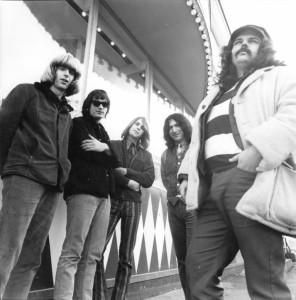
The Grateful Dead and Digital Audio/Video      This week's readings about the debates and technologies of digitizing audio and video are well exemplified by the music and fans of the rock band, The Grateful Dead ("The Dead" from this point forward).  From its lifetime of 1965-1995, and in the various incarnations still touring (Dead and Company is in DC in November, and Phil Lesh is playing in DC in October), the band built a loyal and deadicated fan base, many of whom toured with the band for multiple shows or tours. Fans started recording (aka "bootlegging") shows and shared/traded (and some evil fans sold) them with other fans.  In the 1980's, the band openly embraced the recording and trading, and even set up tapers' sections for fans with recording equipment.  The Dead eventually hired an Archivist to start organizing their collection of recordings in "The Vault," and he restored and preserved these concert recordings. The Grateful...

Unit 5 - Web Design Comments and Thoughts

 My Thoughts on the Readings This section's readings and video identify useful and important considerations for designing and developing a website (I did not know the difference between the two).  You must keep the reader in mind, unless it is a vanity project just for your own viewing or to store/record info/data.  We have all seen "bad" websites that are hard to read, annoying to navigate, or painful to look at.     The web has a lot of resources and formats/guides to help with design, but no one standard rules, and the creator can use whatever meets his or her needs.  There are many tools and applications to aid in web design, and historians can learn gritty technical details, utilize user-friendly programs, or even outsource their sites.  If a historian values their time writing, teaching, researching, etc... over learning to code or maintaining a server, these are good options, and with continuing developments, the options will probabl...